
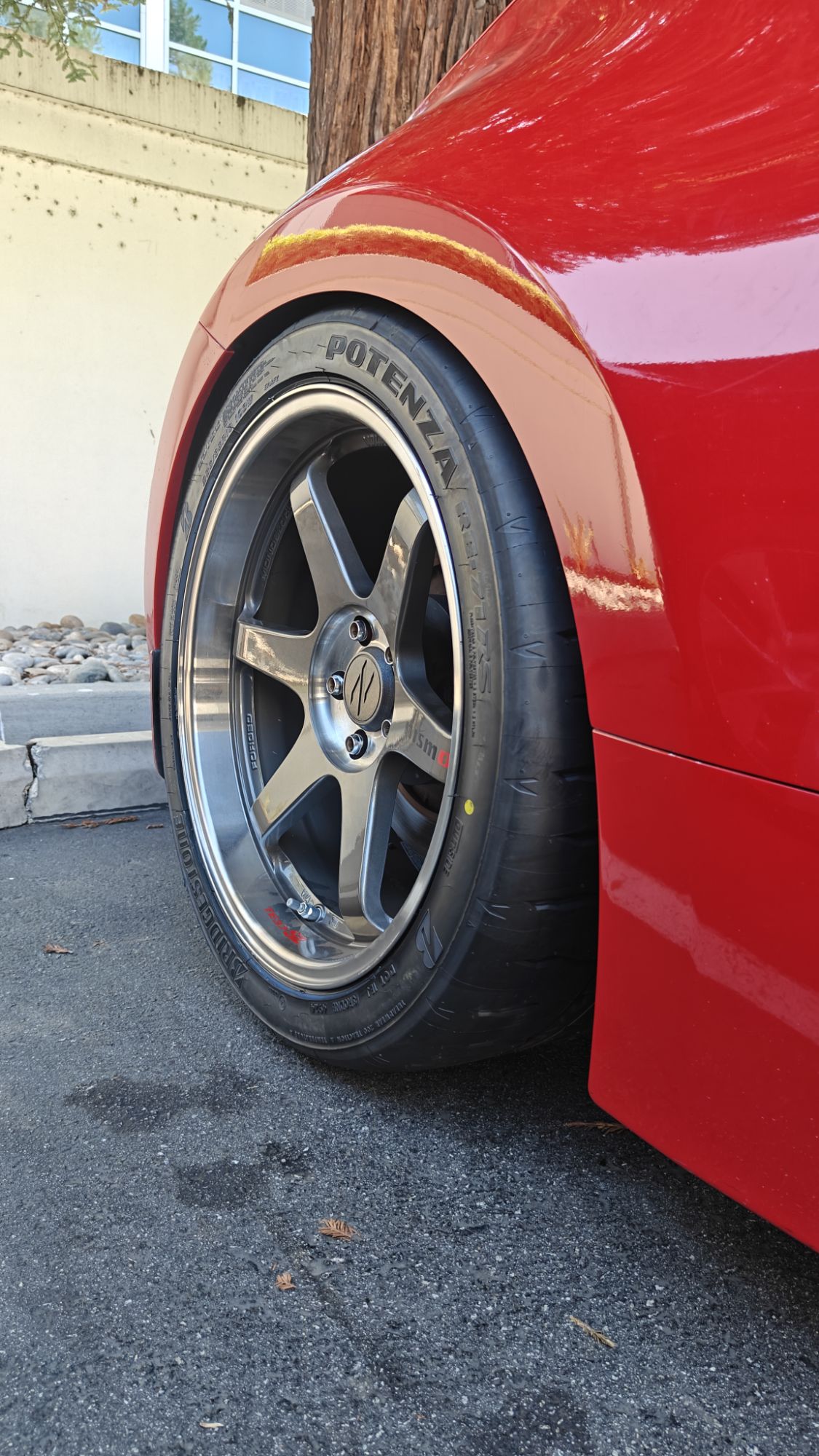
What should be a simple thing, can be as complicated as one can possibly make it.
Setting a proper ride height is not a trivial matter, however. Too high and you look like a 4×4 and have an excessively high center of mass. Too low and you scrape all the important stuff and also lose out on proper suspension geometry for dynamic motions.
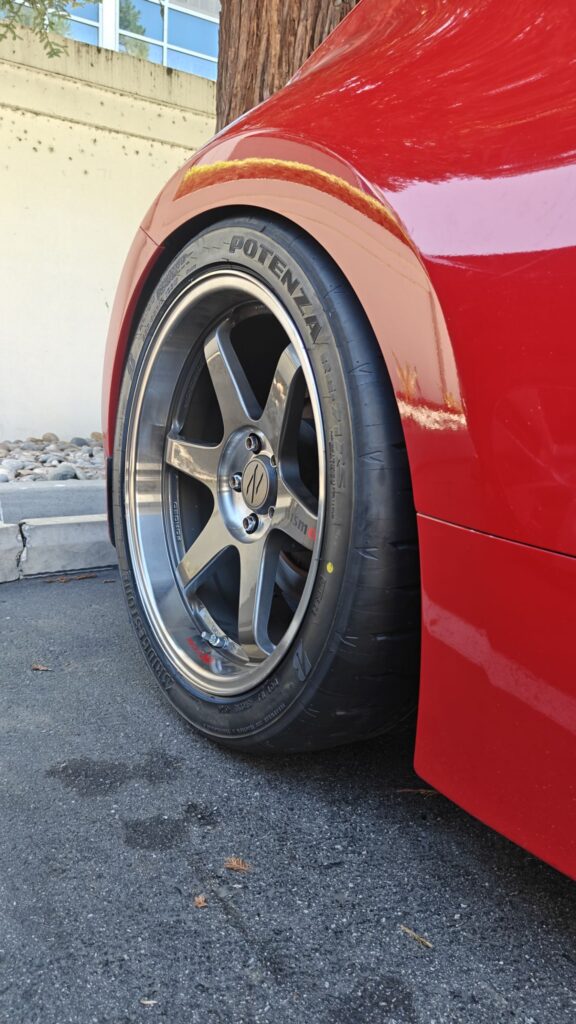
The Goldilocks is of course finding the right balance; maintaining proper geometry, minimizing ride height, while also maintaining sufficient suspension travel as well as preventing rubbing!
It takes tweaking as well as understanding of how the application meets the vision for the setup and response characteristics desired.
Running Fortune Auto coilovers on their full soft setting as I mentioned in a previous post, has been a night snd day difference even coming from the halfway setting (not even full stiff).
However, driving at this setting for a few weeks has revealed unfortunately some major areas for improvement in this suspension application.
Even at full soft, the suspension is severely underdamped on extension (rebound?) and still overdamped on compression (bound?).
There’s a stretch of highway that tells it all to me quite often. Entering a section where the road is higher, that initial entry is always met with a brace for impact and the chassis shoots upward providing minimal absorption of the upward motion. Then, at the end of the raised section, instead of gracefully extending as the wheel drops and allowing the chassis to catch up, the entire chassis drops down and the driver experiences the briefest moment of freefall.
I know cars are capable of having better suspension than this. Even the ~300k mile car on stock suspension handles this stretch of pavement better than the Fortune 500 coils allow.
At full soft, the suspension is also otherwise so underdamped that some bumps and undulations will produce a continued oscillation of the chasiss, sometimes side to side. It’s hard to grasp that a coilover can be this bad on the road, but somehow it is.
Stiffen it up, however and the chassis definitely remains flat and handles smoothly. However it’s worrisome when driving on the roads that a very not unusual bump could unsettle the vehicle stability mid corner.
Unless you’re purely driving on a smooth paved race surface, there’s no good reason to have suspension so stiff that general bumps cannot be tolerated (by the suspension). I’ve run stiff coilovers in the past, yet never felt it was this bad.
Springs are 13k up front, 10k in rear. Compare that to the Hipermax S which are 10k front and 9k rear. The spring rates alone ought to result in improved ride comfort and possibly stability, depending on how the dampers are setup.
It may very well be that a good damper mated with a softer spring can perform better overall than a lower quality damper with stiffer springs.
Leave a Reply